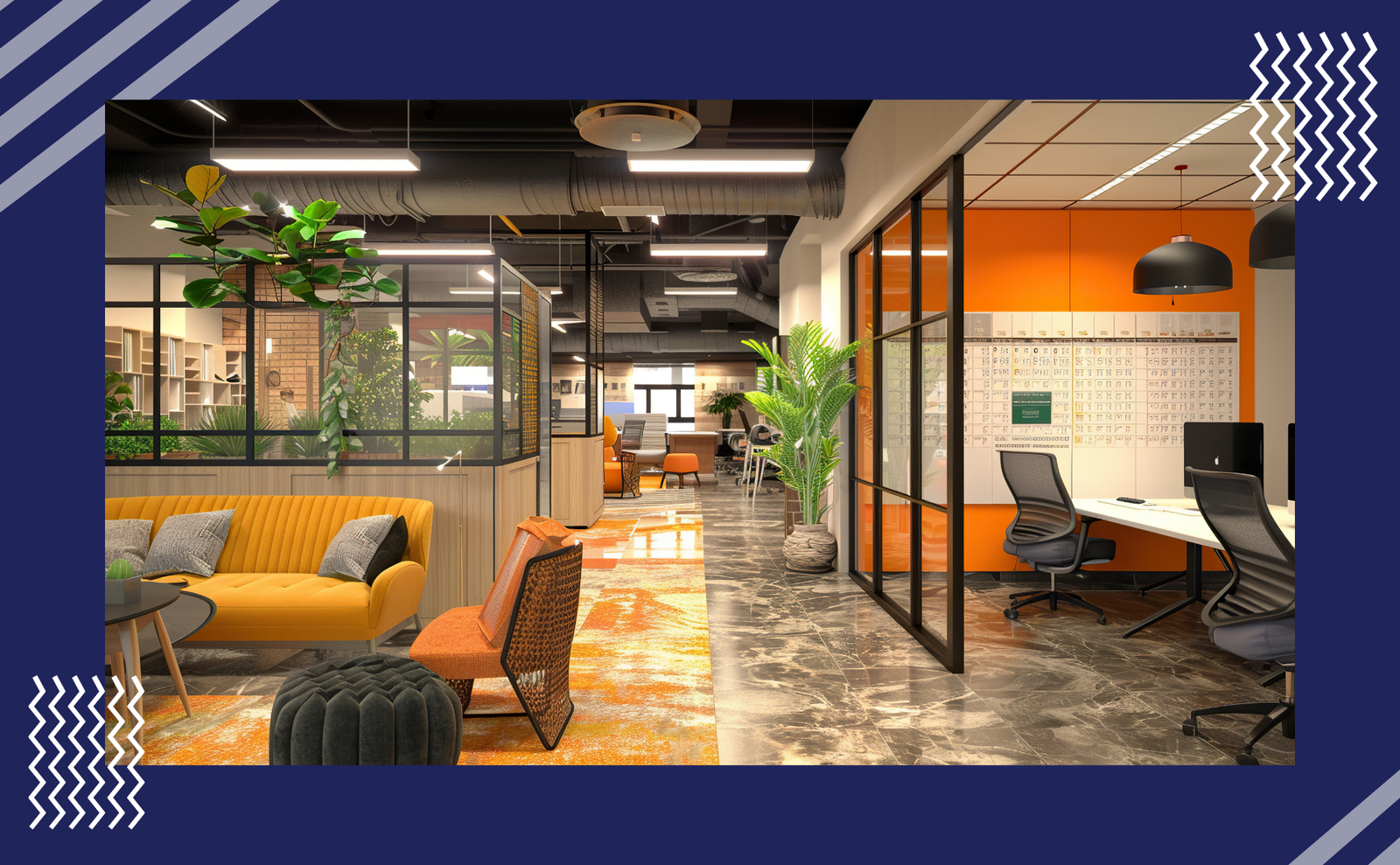
Walk into a well designed office today and something feels different. It doesn’t feel cold. It doesn’t feel rigid. In fact, it often doesn’t even feel like an office.
And that’s not by accident.
Over the last few years, the way we work has changed completely. Hybrid work, flexible schedules and remote setups have forced companies to rethink a basic question. Why should someone come to the office at all?
If the answer is just to sit at a desk, people would rather stay home.
So the best offices today are being designed around experience, comfort and how people actually work.
Offices Are No Longer About Desks
Traditional offices were simple. Rows of desks, fixed seating, meeting rooms and maybe a pantry.
But that model doesn’t work anymore.
Today, most teams don’t operate in one fixed way. Some work needs focus, some needs collaboration and some just needs a quiet corner to think. Research shows that modern offices are shifting towards activity based layouts, where spaces are designed for different types of work instead of one uniform setup.
That’s why you now see:
- Phone booths instead of just meeting rooms
- Lounge areas instead of formal seating
- Collaboration zones instead of long desk rows
Comfort Is No Longer a Luxury
Earlier, comfort in offices was seen as a nice to have but today, it’s become a priority.
Companies have realised that if people are expected to spend long hours at work, the space has to support them physically and mentally. That’s why modern offices are focusing heavily on wellness, lighting, ergonomics and even mood.
Things like natural light, better air quality, acoustic control, and ergonomic furniture are becoming standard because they directly impact productivity and stress levels.
Even lighting is changing. Offices are moving away from harsh fluorescent lights to systems that mimic natural daylight, simply because it helps people feel and perform better.
When a space feels good, people work better. It’s as simple as that.
Offices Are Taking Cues from Hospitality
One of the biggest shifts is this. Offices are borrowing ideas from hotels, cafes and even homes.
This doesn’t mean offices are becoming casual. It means they’re becoming more human.
Designers are now using:
- Softer materials
- Warmer colours
- Comfortable seating
- Layered lighting
That’s why many modern offices feel more like a well designed lounge than a corporate workspace.
The Focus Has Shifted from Looks to Experience
Earlier, office design was often about impressing clients.
Today, it’s about how the space feels to use every day.
There’s a clear shift towards experiential design, where the focus is not just on how a space looks but how it supports daily work, interaction and movement.
For example:
- A breakout area is not just for show, it’s where real conversations happen
- A cafe space is not just aesthetic, it becomes an informal meeting zone
- Even corridors and lobbies are being designed as usable spaces
Flexibility Is Driving Everything
If there’s one word that defines modern offices, it’s flexibility.
Teams are growing, shrinking and changing how they work all the time. So spaces need to adapt.
That’s why:
- Furniture is modular
- Layouts are flexible
- Spaces can be reconfigured easily
So Why Don’t the Best Offices Feel Like Offices?
Because they’re not trying to be.
They’re not built around hierarchy, fixed seating or rigid structures anymore.
They’re built around:
- How people move
- How teams collaborate
- How individuals focus
- And how work actually happens day to day
What It Comes Down To
The best offices right now are not trying too hard to impress. They just work better for the people using them. And when that happens, the space doesn’t feel like a typical office anymore. It just feels easier to be there, easier to move around and easier to get work done without constantly adjusting yourself to the space. You don’t really think about the design in that moment, you just feel that things are working the way they should.