Walk into any office and you can usually tell what kind of company it is within a few seconds.
Some spaces feel very formal. Clean desks, straight lines, everything in its place. Others feel more relaxed. People talking, open layouts, a bit more movement. That difference doesn’t just happen randomly. It comes from how the space has been designed.
When you design an office, you’re not just planning where desks and chairs go. You’re shaping how people experience the space every day.
And honestly, today an office is not just a place to work anymore. It ends up saying a lot about the company itself.
Start With What Your Brand Stands For
Before getting into design ideas or layouts, it helps to pause for a second and think about what your brand represents.
For example, if it’s a law firm, the space usually needs to feel stable and professional. You’ll naturally see more structured layouts, muted tones and a sense of order.
But if it’s a startup or a creative team, the same approach might feel too rigid. Those spaces tend to work better when they’re more open, a little informal and easier to move around in.
There’s no fixed formula here. The idea is simple. The office should feel like your brand, not like something copied from the internet.
Layout Says More Than You Think
Layout is one of those things people don’t always notice directly but it changes everything.
Open offices feel more transparent. People can talk easily, teams stay connected and things move faster. But if it’s not planned properly, it can also get distracting very quickly.
On the other hand, cabins and clearly divided spaces give more privacy. That works better in roles where focus matters more than constant interaction.
Most offices today are somewhere in between. A mix of open desks, meeting rooms, and quieter areas tends to work better than choosing just one type.
The Role of Colours and Materials in Office Design
Colours affect how a space feels, even if you don’t actively think about it.
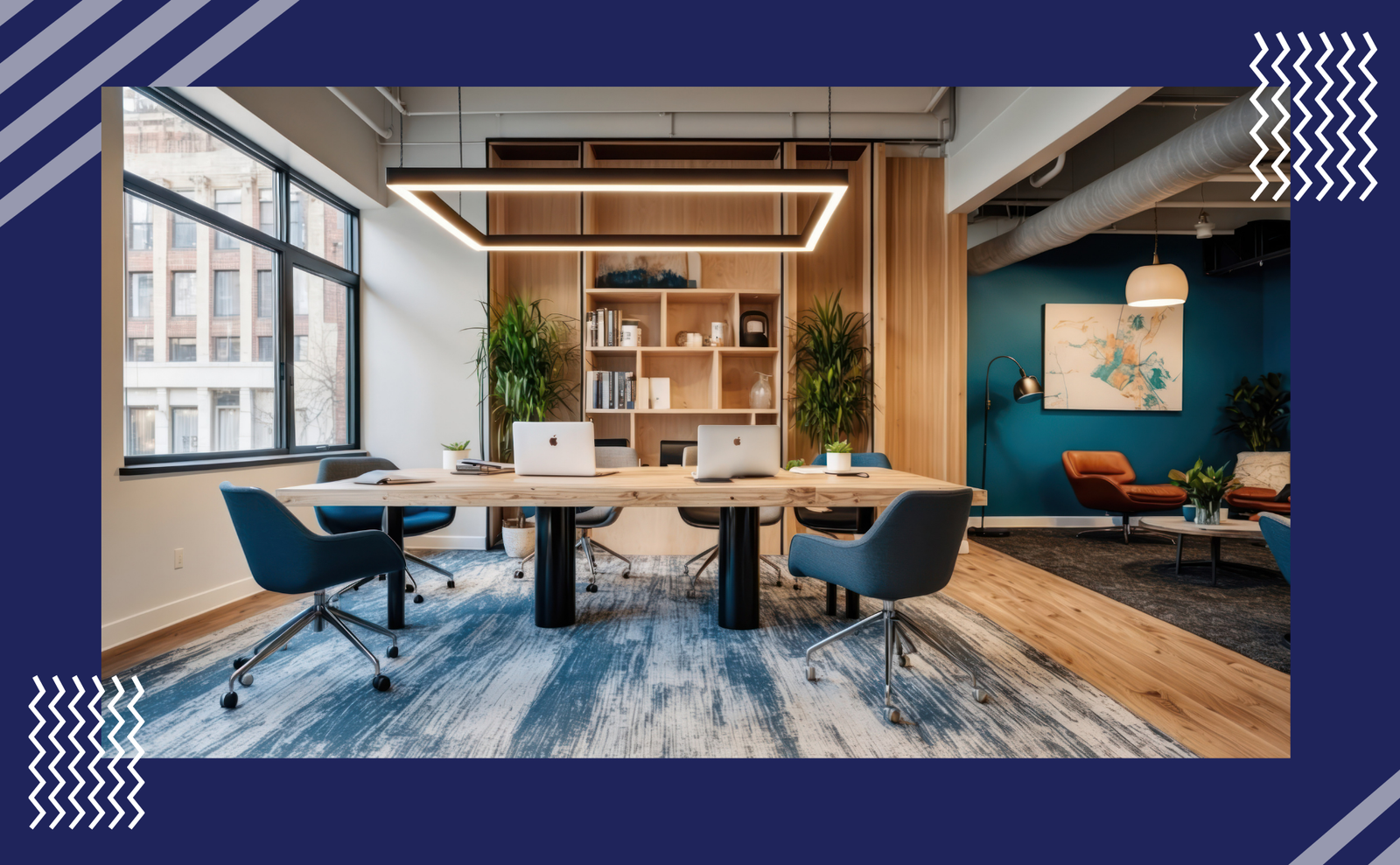
Blues and greys are common in offices because they feel calm and dependable. Wood tones make a space feel warmer and more comfortable. Brighter colours can add energy but only if they’re used carefully.
Materials matter just as much. Glass makes things feel open. Wood adds warmth. Metal and sharper finishes give a more modern look.
What usually goes wrong is when everything is mixed without much thought. Too many styles in one space can make it feel confused.
Branding Should Be Subtle
One thing that doesn’t work well is overdoing branding.
Putting logos everywhere or forcing brand colours into every corner makes the space feel heavy. Almost like it’s trying too hard.
A better approach is to let branding come through naturally.
It could be a well designed reception wall, small details in meeting rooms, or even just a consistent colour palette across the space.
When it’s done right, people notice it without feeling like it’s being pushed at them.
Focus on Function, Not Just Aesthetics
A good looking office is great but that’s not enough.
What’s also important is how the space works on a daily basis.
Can people move around easily?
Are there quiet areas when someone needs to focus?
Is there enough natural light?
Do meeting rooms feel comfortable or cramped?
These things don’t always stand out immediately but over time they make a big difference. They affect how people feel coming to work every day.
Even clients pick up on this without realising it. The space leaves an impression.
Flexibility Is Becoming Important
Workplaces are changing, and offices are changing with them.
A lot of companies don’t want fixed layouts anymore. Teams grow, shrink, or shift, and the office needs to keep up.
That’s why flexible setups are becoming more common. Modular furniture, adaptable spaces, areas that can be used in different ways.
It’s practical, but it also reflects a company that is evolving instead of staying stuck.
Bringing It All Together
At the end of the day, designing an office like this is not really about spending more money. It’s about being clear about what you’re trying to create.
When everything starts aligning, the layout, the materials, the way people use the space, it just feels right. And that feeling is what people carry with them.
Most people won’t remember the exact design details. But they will remember how the space felt when they walked in.
And that’s what ends up defining your brand more than anything else.
This is also why working with experienced turnkey interior designers like Hub and Oak helps. When design and execution are handled together, it becomes much easier to turn ideas into a space that actually works in real life, not just on paper.